
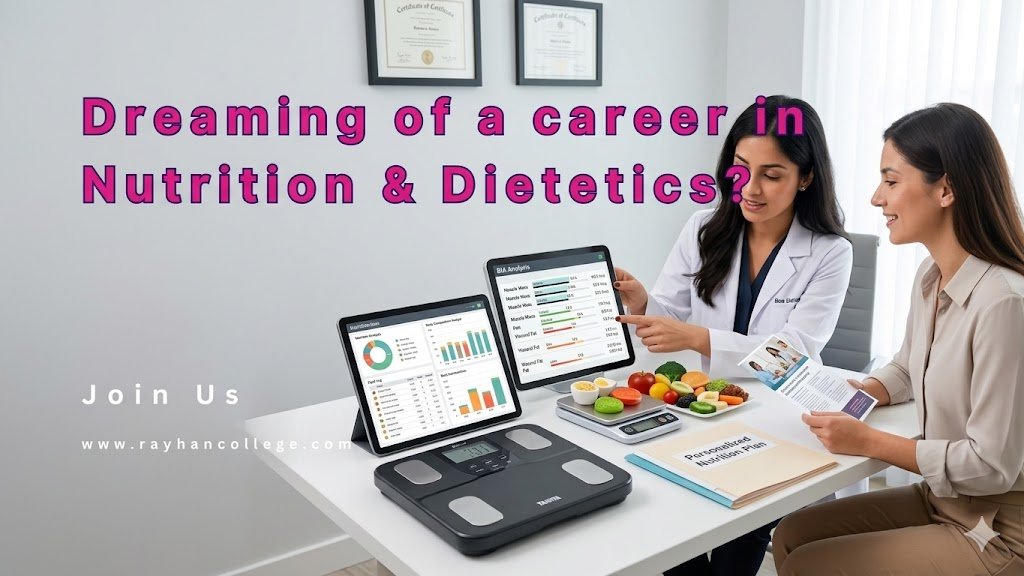
Yes — graduates from BSc Nutrition and Dietetics colleges in Kerala can absolutely become dietitians. This undergraduate program equips students with clinical nutrition knowledge, therapeutic diet planning, and practical hospital training, laying the perfect foundation for a licensed, rewarding career as a certified dietitian in India and abroad.
But what does the path actually look like? What qualifications do you need beyond the degree? And how does studying in Kerala specifically shape your chances? Let me walk you through everything — honestly and practically.
What Does a BSc Nutrition and Dietetics Program Actually Prepare You For?
BSc Nutrition and Dietetics is a three to four year undergraduate program that covers human nutrition science, food biochemistry, clinical dietetics, community nutrition, and therapeutic diet management. It is not simply a course about healthy eating — it is a clinically grounded program designed to produce professionals capable of working alongside doctors, nurses, and healthcare teams.
Students learn to assess nutritional deficiencies, design medical nutrition therapy plans for conditions like diabetes, kidney disease, and cardiovascular illness, and counsel patients on evidence-based dietary practices.
Most reputed BSc Nutrition and Dietetics integrate mandatory hospital internships into the curriculum, meaning students are trained in real clinical environments — not just classrooms — before they ever apply for a job.
What Qualifications Do You Need After BSc to Become a Dietitian?
This is the question most students and parents genuinely want answered. Here is the honest picture:
H3: Registration With the Indian Dietetic Association
After completing your BSc, the most important professional step is registering with the Indian Dietetic Association (IDA). IDA registration is what formally recognizes you as a qualified dietitian in India and allows you to practice professionally in hospitals, clinics, and healthcare organizations.
To register, you typically need your degree certificate and documented internship hours — both of which are completed as part of your BSc program at quality institutions.
Clinical Internship Experience
Even where internships are built into the degree, additional clinical exposure strengthens your professional profile considerably. Many graduates pursue internships in multi-specialty hospitals, sports nutrition centers, or community health programs to build confidence and practical depth before entering full-time employment.
Students from well-connected BSc Nutrition and Dietetics colleges in Kerala often have an advantage here — Kerala’s dense hospital network means more internship opportunities and stronger industry ties than many other states.
Optional PG Qualification for Senior Roles
A BSc alone is enough to begin working as a junior dietitian or nutrition counsellor. However, pursuing an MSc in Dietetics, MSc in Clinical Nutrition, or a PG Diploma in Dietetics significantly expands your scope — opening doors to senior clinical roles, research positions, academic careers, and international placements.
Many BSc graduates in Kerala choose to continue their studies at Kerala’s medical universities or institutions across India before entering the workforce.
Nutritionist vs Dietitian — What Is the Real Difference?
This distinction confuses many students, and it is worth addressing clearly.
A nutritionist typically works in wellness settings — advising healthy individuals on diet, fitness nutrition, and lifestyle improvement. The role is valuable but generally does not involve treating medical conditions.
A dietitian, by contrast, is a clinical professional trained to prescribe therapeutic diets for patients managing specific medical conditions — diabetes, renal failure, eating disorders, cancer, gastrointestinal disease, and more. Dietitians work in hospitals, ICUs, outpatient clinics, and specialized care centers.
BSc Nutrition and Dietetics trains you for both roles, but the clinical modules and hospital internships specifically prepare you for dietitian practice. This dual preparation is one of the reasons the program is so well regarded professionally.
Why Studying at BSc Nutrition and Dietetics Colleges in Kerala Gives You a Real Advantage
Kerala is not just a convenient location — it is genuinely one of the best states in India to study clinical nutrition and dietetics. Here is why:
Healthcare density: Kerala has one of the highest concentrations of hospitals, specialty clinics, and medical research centers per capita in India. This translates directly into richer internship placements and real patient exposure during your studies.
International recognition: Kerala has a long-established track record of sending healthcare professionals to the Gulf, UK, Canada, and Australia. A dietetics qualification from a reputed Kerala institution is recognized and respected in these markets.
Academic quality: Several colleges here are affiliated with established medical and health science universities, ensuring the curriculum meets national and international standards.
If you are researching your options carefully, exploring the leading BSc Nutrition and Dietetics colleges in Kerala is a smart starting point — because clinical training quality, hospital tie-ups, and placement support vary meaningfully between institutions.
FAQ
Q: Is a BSc in Nutrition and Dietetics enough to become a practicing dietitian in India? Yes. A BSc from a recognized institution, combined with IDA registration and completed internship hours, qualifies you to practice as a dietitian in India — particularly in junior clinical and counselling roles.
Q: Do I need to register with the Indian Dietetic Association after my BSc? Yes, IDA registration is the standard professional requirement for dietitians in India. It validates your qualification and allows you to practice in hospitals, clinics, and healthcare organizations formally.
Q: Can BSc Nutrition and Dietetics graduates work abroad as dietitians? Yes, with the right PG qualification or additional certification, graduates — especially from reputed Kerala colleges — can pursue dietitian roles in the Gulf, UK, Canada, and Australia, where demand for clinical nutrition professionals is strong.
Q: What is the average salary of a dietitian in India after BSc? Entry-level dietitians in India typically earn between ₹2.5 to ₹4.5 lakhs per annum, with significant growth potential after a few years of experience or a postgraduate qualification.
Q: Are hospital internships part of the BSc Nutrition and Dietetics curriculum in Kerala? Yes. Most reputed colleges in Kerala include mandatory clinical internships as part of the degree program, ensuring students gain real-world patient experience before graduating.
Conclusion
Becoming a dietitian after BSc Nutrition and Dietetics is not just possible — it is one of the most natural and well-supported career paths this program leads to. With IDA registration, clinical internship hours, and the right college backing you, you are fully equipped to step into a meaningful healthcare career.
Kerala’s healthcare ecosystem makes this journey even more accessible and career-ready than most other states in India.
📍Kuttippuram Road, Edappal, Kerala 679576
📞09388556600
